

Why Slower-Paced Kids Content Matters

Updated: May 8
The Case for Low-Stim Footprint™ Educational Media

Modern children’s content is louder, faster, brighter, and more stimulating than ever before.
Fast cuts. Rapid movement. Constant noise. Endless visual novelty.
Many parents feel something is “off” about it, even if they can’t fully explain why.
At ThoughtNet Solutions, we believe children’s media should support development—not compete for attention.
That’s one of the reasons we intentionally create slower-paced, Low-Stim Footprint™ educational content.
Why Slower Pacing Matters
Children’s brains are still developing.
Their attention systems, emotional regulation, imagination, and ability to focus are all being shaped by repeated experiences.
Research in areas like Cognitive Load and Sensory Overstimulation suggests that constant high-intensity input can overwhelm attention and working memory.
In simpler terms:
when everything is fast all the time, the brain begins expecting constant stimulation.
This can make slower, real-world activities feel “boring” by comparison:
reading
imaginative play
conversations
outdoor exploration
quiet learning
Many modern children’s shows are designed around one thing:
keeping attention at all costs.
This often includes:
rapid scene changes
hyper-saturated colors
nonstop motion
loud sound effects
excessive visual stimulation
The problem is not simply “screens.”
The deeper issue is the level and intensity of stimulation many children are exposed to for hours every day.
It’s Not Just About Frame Rate
People often focus on things like:
24 fps vs. 60 fps
animation smoothness
editing style
Those things matter somewhat—but the bigger issue is overall pacing and stimulation density.
What matters most is:
how quickly scenes change
how much visual information appears at once
how frequently the brain is being “hit” with novelty
Fast pacing combined with bright visuals and nonstop audio creates a constant demand for attention.
By contrast, slower pacing gives children time to:
observe
process
imagine
reflect
Why We Use a Low-Stim Footprint™ Approach
At ThoughtNet Solutions, we intentionally design our content differently.
That means:
slower pacing
fewer rapid cuts
calmer visual flow
gentler movement
breathing room for the mind
This does not mean “boring.”
It means:
we want children engaged—not overstimulated.
We believe children learn best when curiosity is activated naturally, not forced through nonstop sensory input.
The Importance of “Cognitive Breathing Room”
One thing many modern platforms remove is silence, stillness, and pause.
Everything competes for attention.
But children need moments where:
their imagination fills the gap
their thoughts can wander
their brains can process what they just saw
This is especially important in early childhood, when imagination and exploratory thinking are developing rapidly.
Educational thinkers like Maria Montessori emphasized the importance of calm, prepared environments that support concentration and independence rather than constant stimulation.
Similarly, many traditional educational philosophies emphasized rhythm, repetition, nature, and quiet observation.
Real Learning Often Looks Slower
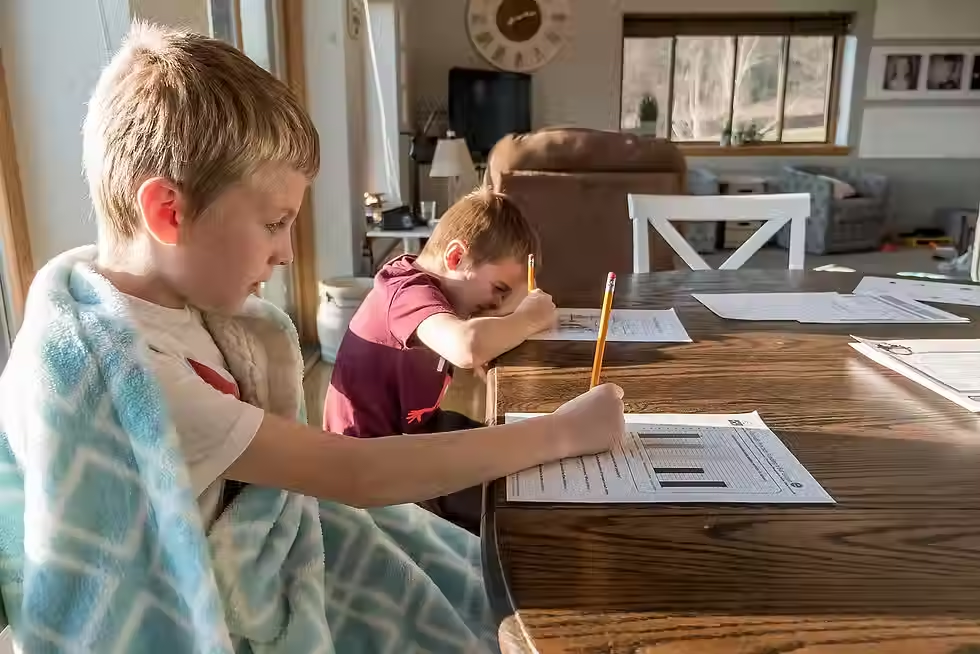
A child deeply engaged in:
building blocks
observing insects
drawing
gardening
listening to a story
…may not look “stimulated.”
But they are learning.
And often, they are learning more deeply than when passively consuming rapid-fire entertainment.
Our Philosophy at ThoughtNet Solutions
We are not anti-technology.
We simply believe technology should serve development—not hijack attention.
Our Low-Stim™ approach is designed to support:
focus
imagination
curiosity
calmer learning environments
healthier attention habits
Because children do not always need more stimulation.
Sometimes they need:
more room to think.
Sources & Supporting Ideas
Maria Montessori — prepared environments and concentration in children
Cognitive Load
Sensory Overstimulation
Executive Function
Additional reading:
The American Academy of Pediatrics recommendations on media use and young children
Research on attention, overstimulation, and rapid pacing in children’s television


Comments